From Roots to Markets: How Are We Cultivating the Future of Honey in Hadramout?
From Roots to Markets: How Are We Cultivating the Future of Honey in Hadramout?
In Hadramout, the story of honey does not begin with the hive, but with the land itself. With those silent landscapes that endure the sun, drought, and wind, while holding within their soil the secret of flavor, quality, and reputation — the very qualities that made Yemeni Sidr honey renowned across global markets, crossing borders to reach the tables of honey connoisseurs around the world.
There, where the value of honey is measured first by its pasture before its weight, the Small and Micro Enterprise Promotion Service (SMEPS) shaped a vision grounded in a simple truth: any meaningful effort to develop the honey sector must begin at its source — with the tree itself.
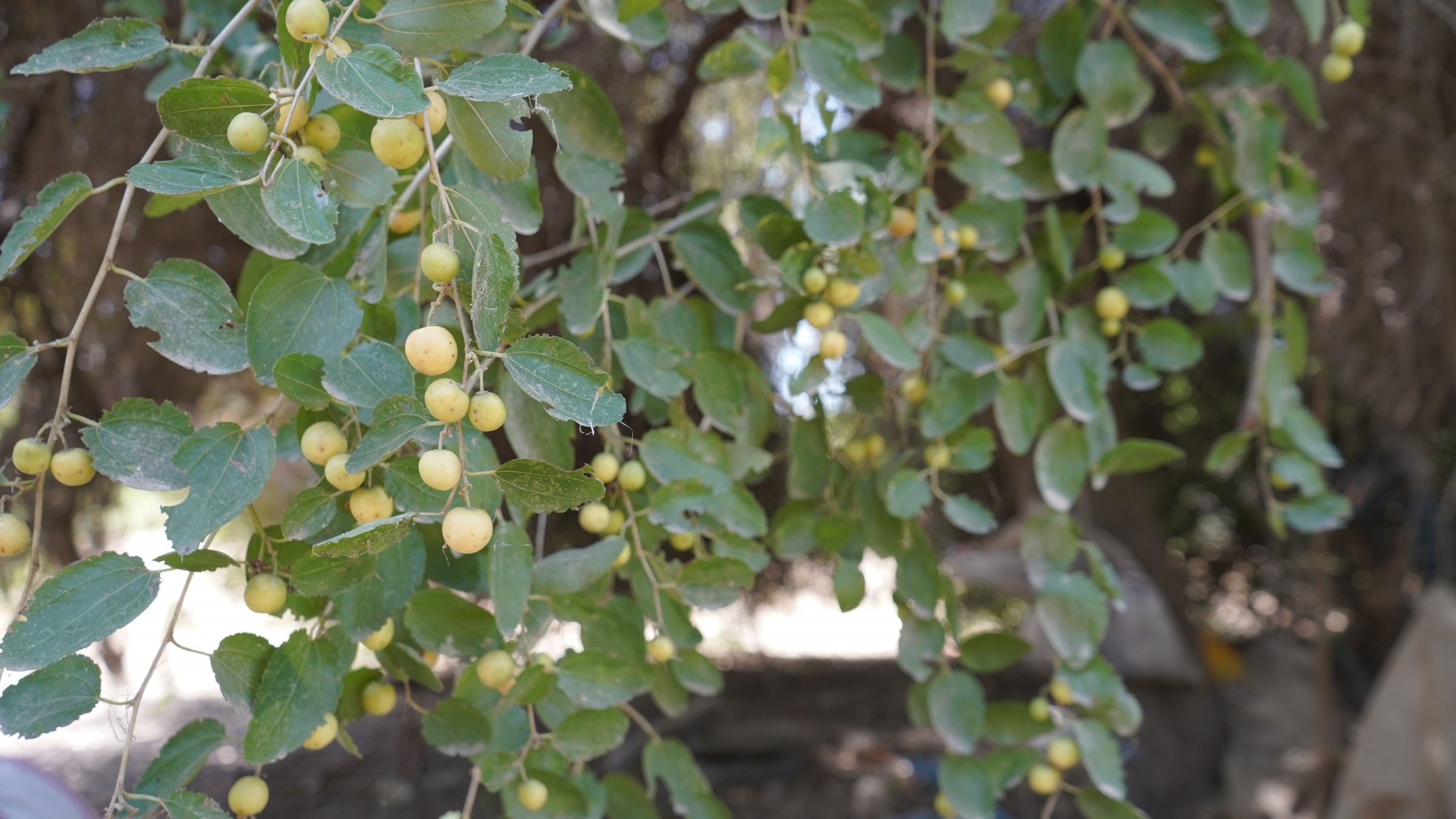
In Yemen, the Sidr tree is not merely a tree planted for scenery. It is a pillar of life. It protects the soil, nourishes the bees, and symbolizes the land’s resilience against harsh climatic conditions. From its blossoms comes the honey known for its rich texture, distinctive taste, aroma, and exceptional value. And when Sidr trees weaken or their coverage declines, the loss is not limited to bees alone; farmers, beekeepers, markets, and the environment all bear the consequences. This simple yet profound equation led SMEPS to realize that a strong honey economy cannot be built upon exhausted pastures.
From this understanding emerged SMEPS’ intervention, generously funded by the Saudi Program for Development and Reconstruction of Yemen (SDRPY) and the Islamic Development Bank (IsDB), under the Markets Yemen Project. What made this intervention different was not only its form, but its spirit. The goal was never limited to improving quality, packaging, branding, or opening new market channels. The deeper decision was to invest in the long term — in something that may not yield immediate results, but when it does, transforms everything around it. The decision was to return to the Sidr tree.
Thus began the journey of planting 60,667 Sidr saplings across seven districts in Wadi Hadramout and the highland honey-producing areas. Small in size, yet immense in meaning, each sapling represented far more than an addition to the green cover. Each one carried a promise of better quality, greater stability, and a less fragile future for an entire sector that thousands of families depend on for their livelihoods.
Over time, this idea evolved beyond a plan into a visible reality on the ground. New green lines now stretch from Tarim — the city of palms and knowledge — to Seiyun, where the valley leans on its agricultural heritage, through Al-Qatn, where the land welcomes bees as openly as it welcomes light, and onward to Alia Shibam, guarding the valley with its ancient mud architecture, and Sah, opening the highlands to honey pastures. Other areas, too, have gradually begun reclaiming their green color, as though slowly and confidently redrawing the environmental map of Wadi Hadramout.
And because SMEPS understands that agriculture is not a moment of celebration but a long-term responsibility, it recognized that a sapling planted today may not survive if left alone against drought and neglect. This is where the partnership with Nahd Developmental Foundation became essential — not merely as a technical implementer, but as a philosophy of development rooted in continuity, protection, and care: irrigation, maintenance, pruning, protection, and community awareness about the value of what is being planted and why it must endure. In this way, the intervention became more than an agricultural activity; it evolved into a participatory social project in which communities feel that these trees belong to them, and that their future is deeply connected to their own.
And with every tree that grows, many things quietly begin to change. The pasture improves, leading to healthier bees. Healthier bees produce better honey. And better honey makes conversations about quality, standards, and marketing genuine rather than cosmetic. In this way, the green intervention directly reflects the spirit of the Markets Yemen Project within the promising honey sector — a project that does not view the market as the end point, but rather as the natural outcome of a long journey that begins with the land, passes through the beekeeper, and ultimately reaches the consumer with confidence.
In this sense, the Sidr tree is not simply a tree; it is a fundamental link within an entire value chain. A link that addresses the root cause before treating the symptoms, and that builds the foundation before decorating the surface. And when this link grows stronger, the impact extends far beyond product quality. The environment regains part of its balance, communities gain more diverse and stable sources of income, and the local economy becomes more resilient in the face of crises.
Perhaps Sidr trees only reach their finest production after many years, but at SMEPS, we chose to think with the mindset of the future rather than the mindset of the season. We chose to plant today what will protect the reputation of Yemeni honey tomorrow, and what will make access to regional and global markets a path built on genuine quality rather than temporary promises.
In the end, this is not merely the story of saplings being planted. It is the story of a vision being implemented — a vision that believes development is not imported ready-made, but built from the ground up. A vision that understands markets are not opened by bypassing reality, but by improving it from its roots. And that a single tree, when planted in the right place and with the right intention, can change the destiny of an entire sector.
This is how the story begins in Hadramout — from a tree. And this is how it steadily moves toward markets, toward a greener future, greater quality, and more life.
This project is funded by the Islamic Development Bank (IsDB) and the Saudi Program for Development and Reconstruction of Yemen (SDRPY).